What Google Isn't Billing You (But Absolutely Is Charging): The Real Price of a 'Free' Android Phone
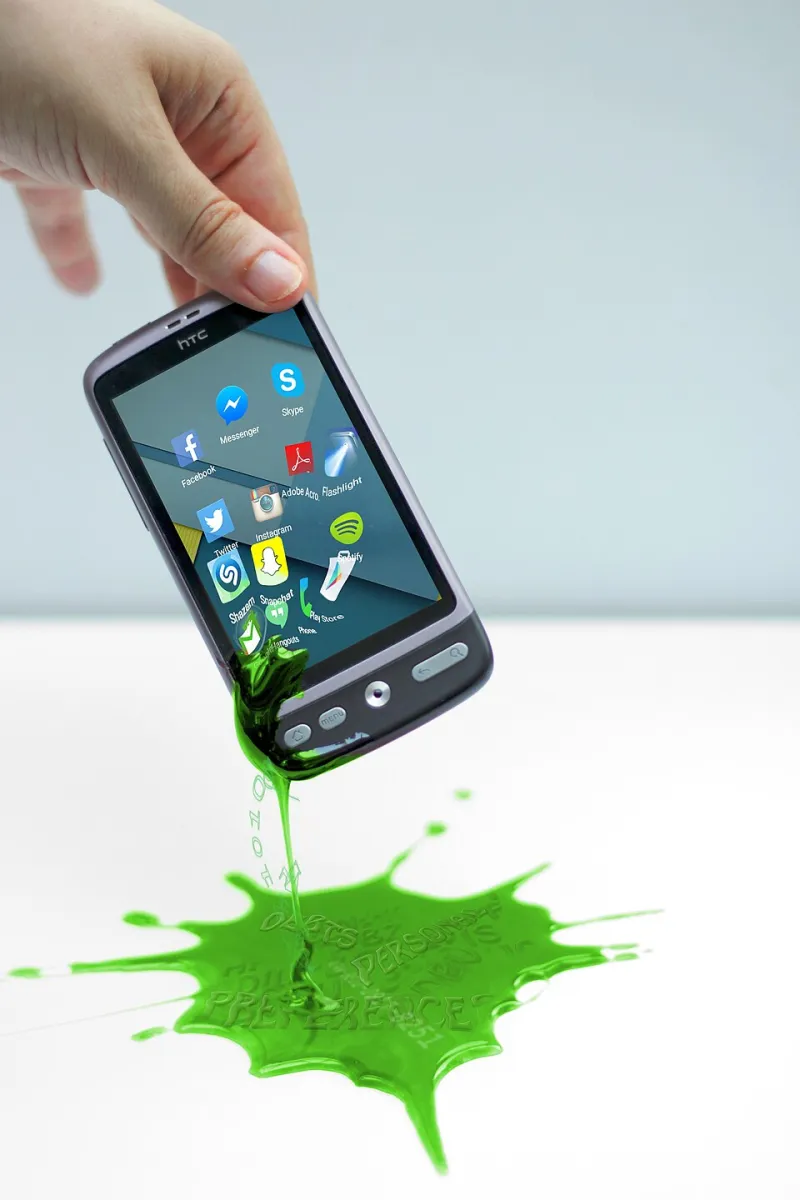
Photo: Stefan Nürnberger, CC BY-SA 4.0, via Wikimedia Commons
Let's start with a number: $182. That's the estimated annual value of the personal data a single American smartphone user generates for Google, according to research from Douglas Schmidt at Vanderbilt University. And that's a conservative figure — it's based on passive data collection alone, before you factor in active search behavior, app usage, location history, or the behavioral profiles assembled by the third-party data brokers Google sells to.
You didn't write that check. You never saw an invoice. But you paid it, every single day, in the only currency that the attention economy actually cares about: your personal information.
This is the financial reality check that proprietary mobile ecosystems would prefer you never sit down and do.
The Myth of the Free Operating System
Android is technically open-source — the Android Open Source Project (AOSP) exists and anyone can download it. But the version of Android that ships on virtually every phone sold at Best Buy or through a carrier isn't AOSP. It's Google Mobile Services (GMS) Android, which comes bundled with a suite of proprietary Google apps and, more importantly, a data collection framework that runs continuously in the background.
You don't pay a license fee for this software. Instead, you sign a terms of service agreement that most people scroll past in under four seconds, granting Google the right to collect an extraordinary range of data: your precise location (updated as frequently as every few minutes when location services are active), your search queries, your browsing history, your app usage patterns, your contacts, your calendar events, and behavioral signals derived from how you interact with your device.
This data fuels a targeted advertising business that generated $237 billion in revenue for Google in 2023 alone. A significant chunk of that revenue traces directly back to user data collected on Android devices. The operating system isn't free. You're just not paying in dollars.
The Planned Obsolescence Tax
Here's where it gets more tangible for the average consumer's actual bank account.
The average American replaces their smartphone every 2.5 to 3 years, according to data from Consumer Intelligence Research Partners. A significant driver of that upgrade cycle isn't hardware failure — it's software abandonment. Manufacturers and Google typically provide security updates for three to four years on flagship devices, and often less on mid-range hardware. Once support ends, you're left with a phone that's functionally fine but increasingly vulnerable to security exploits, and increasingly incompatible with apps that have been updated to require newer Android versions.
Let's put a dollar figure on that. A mid-range Android phone — say, a Pixel 7a or a Samsung Galaxy A54 — runs $400 to $500 at retail. Replace it every three years, and you're spending roughly $150 per year on hardware alone, before you factor in the cost of accessories, cases, screen protectors, and the inevitable carrier upgrade fee. Over a decade, that's $1,500 in hardware costs driven largely by artificial software end-of-life decisions, not actual hardware degradation.
Contrast that with devices running open-source operating systems like QtMoko. Community-supported hardware often receives security patches and updates well beyond the manufacturer's official support window, because the code is open and developers aren't beholden to a product refresh cycle. The Fairphone 2, for instance, received community-maintained software support for nearly a decade. Your hardware investment lasts longer when nobody has a financial incentive to make it obsolete.
The App Ecosystem Toll Booth
Then there's the app economy. The Google Play Store takes a 15 to 30 percent cut of every in-app purchase and subscription sold through the platform. Developers pass that cost to consumers — it's baked into the price of every premium app, every subscription tier, every digital purchase you make on an Android device.
The average American spends around $37 per year on apps and in-app purchases, according to Sensor Tower data. That's a modest number, but roughly $5 to $11 of it is essentially a Google tax on your digital purchases — money that flows upward to a platform middleman rather than to the developer who actually built the thing you're paying for.
On open platforms, F-Droid — the open-source app repository — distributes software without platform fees, without data collection, and without algorithmic manipulation designed to surface paid options over free ones. The economics are structurally different, and they favor the user.
What the Tracking Infrastructure Actually Costs You
Beyond the direct financial math, there's a harder-to-quantify cost that privacy advocates have been sounding the alarm about for years: the downstream consequences of living inside a surveillance ecosystem.
Health insurance companies in the US have increasingly explored using behavioral and location data — sometimes purchased from data brokers who aggregate it from app ecosystems — to inform underwriting decisions. Employers have used location data to monitor remote workers. Law enforcement has issued geofence warrants to Google, compelling the company to identify every device present in a geographic area during a specific time window. These aren't hypothetical risks. They're documented cases.
The financial exposure here is diffuse and hard to pin to a line item, but it's real. A data breach that exposes your behavioral profile — the kind assembled by advertising ecosystems — can contribute to identity theft, targeted phishing, and social engineering attacks that have very concrete dollar costs. The FBI estimates that Americans lost $12.5 billion to cybercrime in 2023, and data harvested from mobile ecosystems is frequently part of the attack surface.
The QtMoko Value Proposition, Plainly Stated
Switching to an open-source mobile OS isn't free of friction or cost. There's a learning curve. Some apps you rely on may require alternatives. Initial setup takes more effort than activating a carrier phone out of the box.
But here's the honest comparison:
- No data monetization tax — your usage isn't being packaged and sold
- Extended hardware lifespan — community support outlasts manufacturer EOL cycles
- No platform toll on purchases — open app ecosystems don't skim 30% off every transaction
- Transparent code — security researchers can audit what's actually running on your device
- No forced upgrade pressure — your hardware works as long as the hardware works
Over a five-year period, the combination of extended hardware life, reduced data exposure risk, and avoided platform fees represents a meaningful financial advantage for the budget-conscious user — and a principled one for anyone who's thought seriously about where their data goes.
Free, it turns out, is the most expensive price point in consumer tech. The bill just comes due somewhere you're not looking.