Your Flagship Is Slowing Down on Purpose — Here's Why Open-Source Phones Just Keep Going

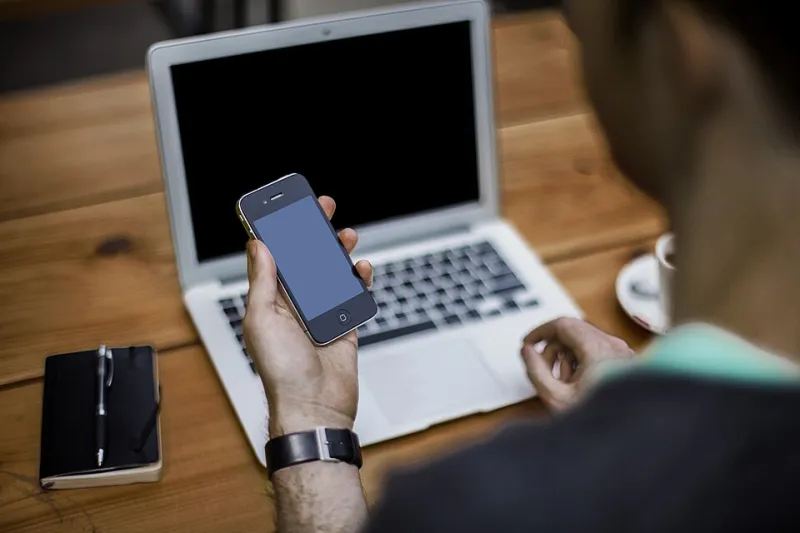
Photo by Photo by Sandip Kalal on Unsplash on Unsplash
You remember the day you unboxed it. The glass was cold, the screen snapped to life instantly, apps launched before your thumb even finished tapping. That $1,100 flagship felt like the future.
Then year two rolled around. Then year three. Now it hesitates before opening your camera. Scrolling through your feed has that weird stuttery quality. Your battery barely makes it to dinner. And somehow, right around the time you start noticing all this, a shiny new model drops — with a slightly better processor and a camera that's marginally improved — for another thousand-plus dollars.
Funny how that works.
Here at QtMoko, we've been watching this pattern long enough to stop calling it bad luck. It's a cycle, it's largely engineered, and open-source mobile software is one of the most effective ways to step off it entirely.
The Mechanics of Manufactured Decline
Let's be clear about one thing: hardware does age. Batteries degrade, storage fills up, and yes, newer apps genuinely demand more from processors. Some slowdown is real and unavoidable.
But the rate at which proprietary phones slow down is not purely a hardware story. A significant chunk of it is software.
When Apple or Google pushes a major OS update, that update is optimized for current-generation hardware. It brings new visual effects, background processes, and system services that older chips weren't designed to handle efficiently. Your two-year-old phone gets the same update as someone who bought their device last month — and it strains under the weight of it. This isn't necessarily malicious in every instance, but the outcome is consistent: your device feels slower after the update than before, and the company just happens to have a solution waiting for you at full retail price.
Apple famously admitted in 2017 that iOS updates were throttling older iPhones — framed as a battery protection measure, but experienced by millions of users as sudden, unexplained sluggishness. They paid out hundreds of millions in settlements. The practice, in various forms, continues.
Android manufacturers have their own version of this. Bloatware accumulates. Background services multiply. Security patches, when they arrive at all, often come bundled with interface changes that eat into available memory on devices that were already running lean.
What Open-Source Does Differently
Open-source mobile operating systems — the kind QtMoko is built around — operate on a completely different incentive structure. There's no revenue tied to your upgrade decision. Nobody profits when you buy new hardware. The community maintaining the software has every reason to keep it running well on older devices, because many of those contributors are running older devices.
That's not a small distinction. It's the whole ballgame.
When a community-maintained project pushes an update, the goal is genuinely to improve the experience — not to quietly create conditions that make last year's phone feel inadequate. Developers optimizing for a wide range of hardware ages tend to write leaner, more efficient code. They're not padding the software stack with features designed to showcase new chips, because they're not selling chips.
The result? Devices running open-source software routinely remain useful and responsive well past the two-to-three year window where proprietary phones start showing their age. It's not uncommon to see hardware from five, six, even ten years ago running smoothly on an actively maintained open-source build. Try that with stock Android on a 2015 device and see what happens.
The Lifecycle Trap Is a Financial Product
Here's the part that tends to land differently when you say it out loud: the smartphone upgrade cycle is, functionally, a subscription you didn't sign up for.
The average American now replaces their phone every two to three years. At flagship prices, that's roughly $400 to $500 per year when you average it out — more if you're financing through your carrier at interest. Multiply that across a household and you're talking about a recurring cost that rivals a car payment.
Who benefits from that cycle? Not you. The manufacturers do. The carriers do — upgrade plans are enormously profitable. The data brokers who get a fresh device profile every time you set up a new phone certainly do.
Open-source phones don't eliminate hardware costs, but they dramatically extend the useful life of the hardware you already own. When your software isn't working against your device, that device lasts longer. It's not magic — it's just the absence of artificial pressure.
The Community as a Long-Term Maintenance Crew
One of the more underrated aspects of open-source longevity is what happens when a device falls out of official support. With a proprietary OS, end-of-support means the end. No more security patches. No more feature updates. Your choices are to keep using an increasingly vulnerable device or buy something new.
With open-source, the community often picks up exactly where the manufacturer dropped off. Independent developers have maintained active builds for hardware that the original vendors abandoned years prior. Security patches get backported. Performance optimizations keep coming. The device doesn't suddenly become a liability just because a corporation decided it was no longer profitable to support.
This is the open-source advantage that rarely gets talked about in mainstream tech coverage — not the features, not the customization, but the sheer staying power that comes from software maintained by people who actually use it.
What This Means for You
If you're reading this on a phone that's starting to feel sluggish, there's a decent chance the hardware is fine. What's weighing it down is layers of software overhead that were never designed with your long-term satisfaction in mind.
Switching to an open-source mobile OS isn't a perfect solution for everyone — there's a learning curve, and some app compatibility trade-offs are real. We've covered those honestly in other pieces here on QtMoko. But if longevity matters to you — if you'd rather spend your money on things other than a new phone every 30 months — it's worth taking seriously.
Your phone doesn't have to slow down on someone else's schedule. That's the whole point.
Open mobile. Your phone, your rules — and your timeline.