Fix It Yourself: How Open-Source Mobile Software Became the Right-to-Repair Movement's Secret Weapon
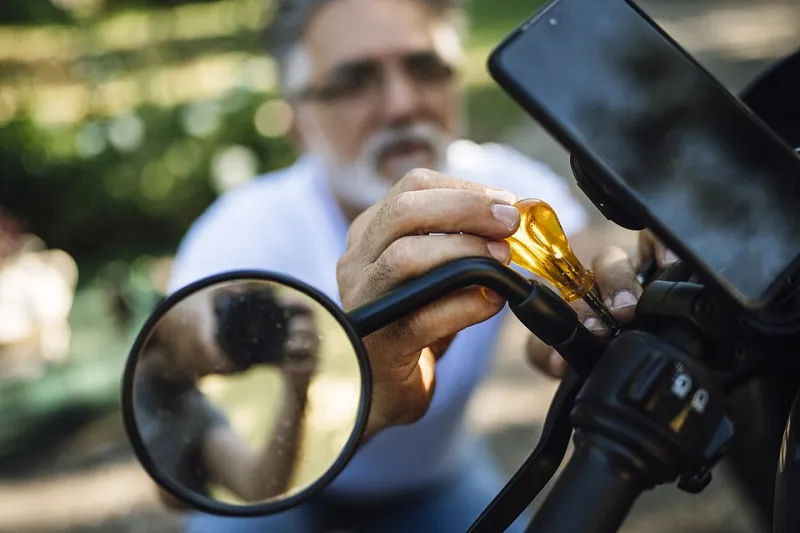
Photo: Shixart1985, CC BY 2.0, via Wikimedia Commons
There's a cracked screen sitting in a drawer somewhere in your house. Maybe it's an old Samsung. Maybe it's a Pixel that just needed a new battery but somehow cost $200 to "repair" at an authorized service center. You kept it because throwing it away felt wrong, but fixing it felt impossible.
That feeling isn't accidental. It was engineered.
For years, smartphone manufacturers have wielded proprietary software the same way they've wielded proprietary screws — as a deliberate barrier between you and your own device. But something is shifting. Right-to-repair has gone from a fringe advocacy position to actual law in several US states, and open-source mobile operating systems are emerging as a surprisingly powerful ally in that fight.
The Software Lock Is Just as Real as the Physical One
Most people think of right-to-repair in physical terms: special screws, glued-in batteries, components that are serialized so they won't function unless replaced by an authorized technician. Apple's "parts pairing" practice — where even a genuine Apple battery won't work properly in an iPhone unless it's authenticated by Apple's own software — is probably the most widely covered example.
But the software dimension of repair lockdown runs deeper than most consumers realize. Proprietary operating systems can actively prevent you from sideloading alternative firmware, flag your device as "tampered" if you unlock the bootloader, or simply stop delivering security updates to hardware that's two or three years old — effectively forcing an upgrade cycle that has nothing to do with the physical condition of your phone.
Your four-year-old Android phone might have a perfectly functional processor, screen, and battery. But if the manufacturer has stopped pushing updates, you're stuck choosing between a device with unpatched security vulnerabilities or buying new hardware. That's not obsolescence — that's a business model.
New York Opened the Door. Other States Are Walking Through It.
In December 2022, New York Governor Kathy Hochul signed the Digital Fair Repair Act into law, making New York the first US state to require manufacturers of consumer electronics to make parts, tools, and documentation available to independent repair shops and individual consumers. It was a landmark moment, even if the final legislation was somewhat narrowed from its original form.
Minnesota followed in 2023 with its own right-to-repair law for consumer electronics, and Colorado passed legislation covering agricultural equipment and powered wheelchairs. California has been circling similar legislation for consumer devices. The federal Right to Repair Act has been introduced in Congress multiple times, and while it hasn't passed yet, the political momentum is real and growing.
What these laws recognize — and what the smartphone industry has fought hard to obscure — is that ownership should mean something. When you spend $1,000 on a phone, you should have a legitimate claim to fix it, modify it, and extend its useful life.
Open-source software makes that claim actionable.
QtMoko and the Longevity Equation
Here's where things get practical. An open-source mobile OS doesn't just give you an alternative to Android or iOS — it gives you a path to keep using hardware that manufacturers have deliberately abandoned.
When a device manufacturer stops supporting a phone model, they're not just ending software updates. They're ending your ability to safely use that device in the modern world. Security patches stop. App compatibility degrades. The phone becomes a liability.
With an open-source operating system, that equation flips. Community developers can continue maintaining and updating software for hardware long after manufacturers have moved on. Devices that would otherwise end up in a landfill can run current, secure software. That's not just good for your wallet — it's genuinely good for the environment. The EPA estimates that Americans generated about 6.9 million tons of e-waste in a recent measured year, and a significant portion of that waste is driven by artificial software obsolescence.
Running QtMoko on older compatible hardware isn't just a privacy choice. It's a repair choice. It's an environmental choice. It's a statement that your phone's useful life should be determined by its physical condition, not by a product manager's roadmap.
The Authorization Game and How Open Source Sidesteps It
One of the more insidious tactics in the manufacturer playbook is what repair advocates call "software authorization" — the practice of requiring manufacturer approval for replacement parts to function correctly. We've seen this with Face ID sensors on iPhones, with Samsung display replacements that lose certain features unless authenticated, and with a growing list of components across multiple brands.
Open-source operating systems can't solve every hardware-level pairing scheme, but they fundamentally change the relationship between the user and the software layer. When the OS itself is open, community developers can audit it, modify it, and in many cases work around software-enforced restrictions that serve no purpose except to protect manufacturer revenue streams.
More importantly, open-source mobile software removes the manufacturer as the gatekeeper of your device's functionality entirely. You're not waiting for a company to decide whether your repair is "authorized." You're in control.
What This Means for You Right Now
If you're in a state that has passed right-to-repair legislation, you have new legal standing to demand parts, tools, and documentation for your devices. That's meaningful progress. But legislation moves slowly, and manufacturers are creative in finding compliance loopholes.
The most durable form of right-to-repair isn't waiting for lawmakers to catch up with the industry — it's choosing software that doesn't lock you out in the first place. It's running an OS that doesn't treat your ownership as provisional. It's making decisions today that keep your hardware useful for years instead of months.
Your phone is a physical object that you bought. The software running on it should serve you, not the company that sold it to you. That's not a radical idea. It's just what ownership is supposed to mean.